
You are sitting in Da Nang, but Instagram reports a login from another city. Before assuming the account has been stolen, separate your physical location from the internet route your device uses. Those can differ for ordinary technical reasons.
The opposite mistake is equally risky: dismissing an unfamiliar session because location estimates are imperfect. A city mismatch may be harmless; an unknown device posting messages at an unexplained time is another matter. Evaluate the complete event, not just the place name.
This guide explains the main sources of location confusion and a practical process for reviewing alerts. A static IP can make a configured connection more consistent, but consistency alone cannot tell you who is operating an account.
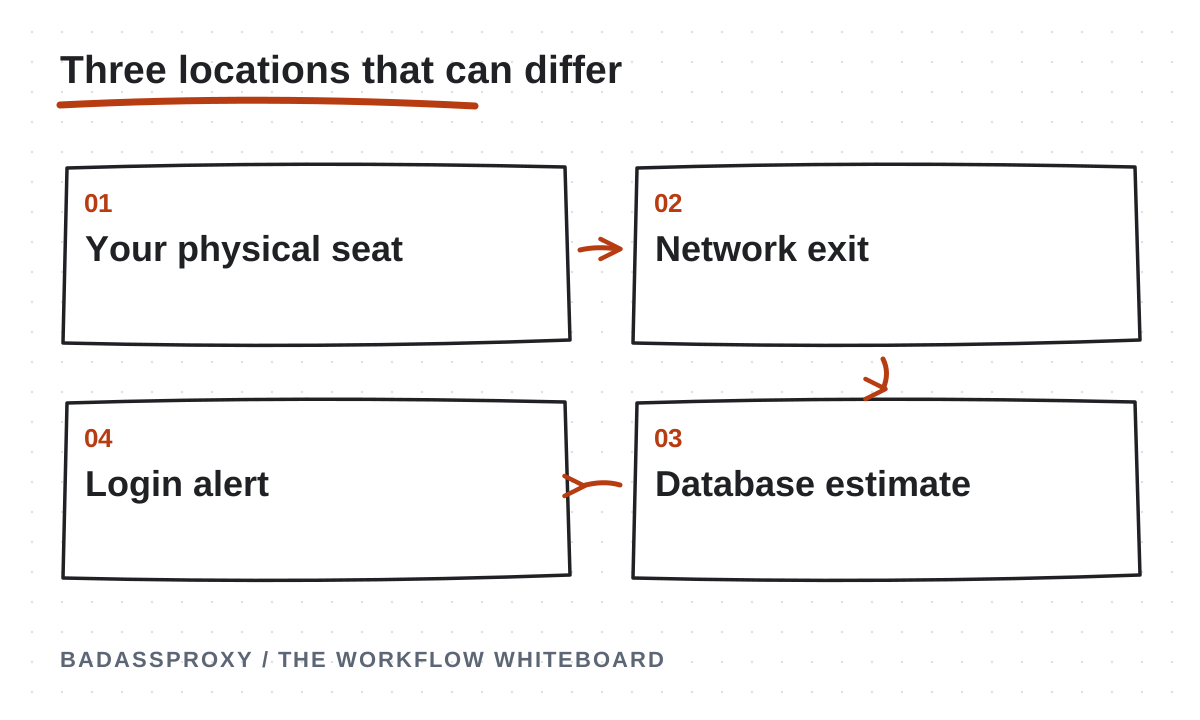
Physical location and network exit are different
Your physical location is where you and the device actually are. Your network exit is the internet-facing point used for the connection. A location database may associate that exit with a city or region, which can differ from your seat in a hotel lobby.
A mobile carrier can carry traffic across its own infrastructure before it reaches the wider internet. A company network can use a centralized gateway. A VPN or proxy adds another exit. None of these arrangements requires your phone to be physically present where the gateway is located.
Also distinguish IP-based estimates from device location permissions. GPS and browser geolocation are different mechanisms. You cannot assume that a particular login notice is a precise GPS reading, nor that every platform feature uses the same source of location information.
Why geolocation databases disagree
IP geolocation services estimate where addresses are used from available network information. Their methods, update schedules, and confidence vary. An address can be reassigned or routed differently before every database reflects the change, so two lookup websites may show different cities.
MaxMind explains that its geolocation data has accuracy limits and cannot identify a particular household or street address. Mobile networks and privacy services can further limit the precision of an end-user estimate. That source describes its own data; it does not establish which database Instagram uses.
Avoid treating a third-party lookup as the final authority on a platform alert. It provides context about an address, not proof of account ownership. A mismatch is a reason to compare more evidence, not a reason to immediately change every account setting.
Mobile networks can look geographically broad
A travel SIM gives your device access to a carrier network, but the internet-facing infrastructure may serve a wide region. A visitor in one city may therefore see an address associated with another population center or network hub.
Changing from Wi-Fi to mobile data can also change the public address without moving the phone. The same applies when a carrier changes routing or a connection reconnects. These are normal networking possibilities, not evidence that a social account automatically becomes unsafe on mobile data.
Write down whether you were using your local SIM, roaming service, or a hotspot when the alert appeared. That small detail often makes a location discrepancy easier to understand. Do not include the SIM's private account credentials or recovery codes in your troubleshooting note.
VPNs and proxies show another exit
When a VPN or proxy routes a connection through an endpoint elsewhere, an IP-based location estimate generally describes that endpoint. Your physical position remains unchanged. A VPN set to Singapore can therefore explain a Singapore-related alert during an otherwise ordinary session in Vietnam.
Check the endpoint that was actually active at the time. Some applications reconnect automatically, choose a recommended server, or preserve a previous setting. Do not rely solely on what you intended to select. Review the client's status and the configured browser's external address.
Our VPN and static proxy comparison explains differences in coverage. A proxy attached to one AdsPower profile does not automatically change the route of your phone's Instagram app. Different applications on the same desk can legitimately use different exits.
Shared networks create another layer
Hotels, coworking spaces, and cafes can route many devices through a common gateway. The gateway's registered or estimated location may not match the venue's address. A large organization may operate connectivity through centralized infrastructure that covers multiple properties.
The visible address may also change during network maintenance or a switch between providers. That can coincide with a page reload or login without indicating a compromised account. Still, a familiar venue name is not enough to trust a hotspot that you have not verified.
Use the public Wi-Fi guide to distinguish connection behavior from security concerns. The important question is not whether every hotspot has a perfectly accurate city label, but whether the network and the session match activity you actually authorized.
Review the whole login event
Start with the time, allowing for the time zone shown by the interface. Compare the device or browser description with your equipment. Then consider recent actions: opening the app, signing in again, switching networks, or an authorized teammate accessing the business.
Review any related activity. Unexpected posts, messages, password changes, connected applications, or recovery-detail changes are stronger warning signs than an approximate city name alone. If a teammate was working, confirm through a trusted channel rather than assuming their presence explains everything.
Meta's Instagram security guidance describes login alerts and reviewing unfamiliar access. Use the current controls in your app, since menu locations can change. A screenshot of the event can help preserve evidence before you remove an unknown session.
A calm example of a harmless mismatch
Imagine opening Instagram on your usual laptop at ten in the morning. Minutes later, a login notification shows the same browser and a different Vietnamese city. You remember switching from apartment Wi-Fi to a hotspot just before signing in.
That pattern is consistent with a routing or geolocation explanation. Check active sessions and recent account activity to confirm there is nothing else unexplained. You do not need to manufacture a crisis solely because the city label is imperfect.
This is an illustrative scenario, not a diagnosis of every similar alert. The useful lesson is to combine evidence. Familiar timing, expected equipment, and your own network change provide a more complete picture than either trusting or rejecting the location field in isolation.
A different example that deserves action
Now imagine a session from an unfamiliar device while you were asleep, followed by messages you did not send. Even if you use a VPN and location estimates sometimes vary, the combined evidence deserves a security response.
Use the platform's available controls to remove access you do not recognize, change compromised credentials, and review recovery details. Secure the connected email account as well. If you cannot regain control, go directly to Instagram's official recovery page rather than a link sent by a stranger.
Preserve relevant evidence without delaying urgent protective action. Keep records private and redact personal messages before sharing them with support. A stable network setup is a future operational choice; it is not a substitute for responding to unauthorized activity now.
Make future alerts easier to interpret
Reduce needless switching between VPN countries and keep a simple record of your intended route. If one browser workflow needs continuity, a static IP can hold its network exit steady while the underlying Wi-Fi changes.
Reuse a persistent browser profile and keep software updated. Record intentional endpoint replacements and device changes. For a team, document who is authorized to use each account and how they notify the owner about sensitive changes. These practices improve your ability to explain events.
Do not try to force every device setting to match a purchased endpoint's city. Supply accurate account and business information. A proxy location is not evidence of residence or permission to access a restricted feature, and cosmetic consistency cannot establish identity.
Take care when comparing timestamps across borders. An alert may display a time zone different from your travel diary or a teammate's message. Convert both to one reference before concluding that you were offline during the event. Keep the original timestamp in your private notes so the comparison can be checked later. This does not excuse an unknown login; it prevents a simple timing mistake from becoming the basis of an incorrect explanation or an unnecessary recovery attempt.
Know what a stable address cannot prove
Several people can appear through one shared gateway, while one legitimate owner can use several addresses. Someone with stolen session access might also use infrastructure that appears familiar. That is why an IP address should never be treated as a password or an identity certificate.
A dedicated static service can reduce the number of changing network variables, but the owner must still control devices, sessions, recovery methods, and team permissions. If you are relocating, our Vietnam account-stability guide places connection planning alongside those responsibilities.
An unexpected place name is a clue, not a verdict. Check the route, compare the complete event, and respond through official security controls when something remains unexplained. If the account is actually restricted, use the login diagnosis guide to choose the correct next step.