

A static IP for Instagram is useful when you need a repeatable network exit for an authorized workflow. Its value is consistency: the same configured browser can use the same assigned address while you move between an apartment, a coworking space, and a hotel.
That is a narrower benefit than many advertisements suggest. A static address does not make an account invisible, guarantee acceptance, or demonstrate ownership. Instagram users routinely change networks legitimately. The question is whether reducing unnecessary network changes makes your particular work easier to operate and troubleshoot.
Before buying, understand what stays static, which traffic uses it, and what happens when the service expires. Those details matter more than a promise that one address type is automatically trusted.
Three address behaviors to understand
A dynamic address can change when your internet provider reallocates it. The timing varies: some household connections keep the same public address for a long period, while mobile connections may behave differently. Dynamic does not mean a new address appears on every request.
A rotating proxy intentionally changes the exit according to its service design, perhaps between requests or after a session interval. A static service aims to keep an assigned exit available across repeated use. These labels describe assignment behavior rather than a platform's opinion of the traffic.
“Sticky” deserves special attention. A sticky session may retain an address only for a limited interval or while a device remains available. Ask whether the product promises an ongoing assignment or merely temporary continuity. Our static versus rotating comparison examines that distinction.
The address Instagram sees
On a typical network, your laptop has a local address used inside the building. The internet-facing address can be shared by many devices. When your browser uses a proxy correctly, the destination connection normally comes from the proxy's exit rather than that building's public gateway.
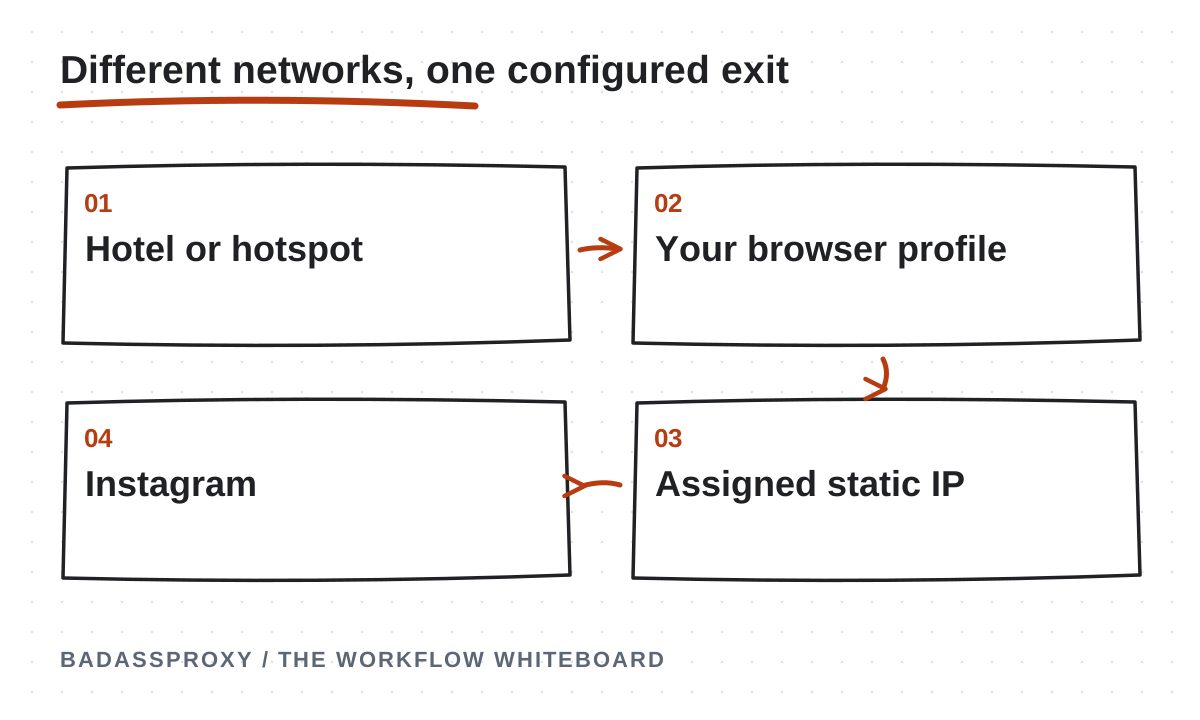
This lets an underlying network change without necessarily changing the configured browser's exit. However, the proxy cannot keep a disconnected laptop online. If the hotel Wi-Fi fails, the session still loses connectivity until the underlying connection returns or you switch networks.
Distinguish consistency from availability. A provider can promise an assigned address yet experience downtime. Your own network can fail while the provider remains healthy. Keeping those two responsibilities separate makes support conversations more precise and prevents unnecessary changes to a working profile.
Static, dedicated, and residential mean different things
Static describes whether the address persists. Dedicated describes exclusivity. Residential describes a network category or commercial product label. You can encounter a static shared address, a dedicated datacenter address, or an ISP-associated product hosted on server infrastructure.
Do not infer all three properties from a product name. Ask whether other customers use the same exit, how assignment is maintained, and what happens after a missed renewal. If the provider replaces an address during maintenance, find out whether you receive notice and configuration instructions.
Our residential and datacenter comparison offers a buying checklist. For a long-term browser workflow, the service contract and actual behavior are more informative than a label implying that every residential connection resembles a private household.
Why travelers consider a stable exit
Consider a creator who writes captions on apartment Wi-Fi, reviews messages through a hotspot, and finishes a campaign at a coworking space. A configured static route can keep that browser's network exit consistent across those ordinary changes.
The practical benefit is a clearer operating baseline. If an error appears, the creator can check the proxy status, browser session, and underlying connection separately. A small record of planned changes helps distinguish a provider outage from an expired login or unavailable recovery method.
This is an operational inference, not evidence that a particular address prevents security checks. Platforms use multiple signals and publish no universal safe number of IP changes. Our Vietnam relocation guide explains why consistency should be presented as a control rather than a guarantee.
Decide which applications need the route
A proxy assigned to an AdsPower profile applies to that profile's supported traffic. It does not automatically route the native Instagram app, a second browser, a desktop uploader, or every device connected to your router. Write down the intended boundary before setup.
If you need general protection for traffic across your computer, evaluate the device-wide options separately. A VPN may fit that requirement, while a static proxy may fit a specific browser workspace. Some VPN plans also offer dedicated addresses, so compare features instead of relying on labels.
Avoid casually stacking multiple routing tools. A VPN beneath a proxy can work, but introduces extra dependencies and troubleshooting steps. See VPN versus static proxy for Instagram before combining services. The simplest configuration that meets your requirement is usually easier to maintain.
Choose a location for a real workflow
Choose an available endpoint location that fits the legitimate operating requirements you can explain. A remote team may have documented infrastructure or contractual requirements. A traveler may simply want a reliable consistent route. Neither use requires inventing a false personal or business identity.
An exit location is not evidence of residence, tax status, advertiser eligibility, or access rights. Do not change account details to match a purchased address merely because a provider suggests it. Supply accurate information wherever the platform requests it.
Also consider distance and latency. Routing traffic through a faraway endpoint can make pages slower or uploads less dependable. Test normal work from your actual destination where possible, and ask about supported regions before committing to a lengthy term you have not evaluated.
Test before signing in
Start with the provider's current connection instructions. Confirm the protocol, hostname, port, and authentication method. Store credentials in a password manager and keep them out of screenshots, public notes, and support tickets unless a secure process specifically requires them.
Open the intended browser profile and check its external address. Close and reopen it, then check again. If practical, switch the underlying network and repeat. These observations show whether your setup maintains the assigned exit; they do not measure account trust or future enforcement risk.
Review the application's documentation for DNS, browser real-time communication, and connection-failure behavior where relevant. Do not assume a browser proxy covers every network feature. If the observed route differs from the expected configuration, resolve that discrepancy before making the profile part of important work.
Preserve the browser environment sensibly
A stable address cannot preserve cookies you delete. Keep the authorized workflow in a persistent profile and avoid routine resets that have no troubleshooting purpose. AdsPower can help manage separate profiles, but a personal browser profile may be sufficient for a single uncomplicated account.
Persistence does not justify outdated software. Install security updates and remove extensions you no longer need. If compromise is suspected, revoke sessions and rebuild the environment when necessary, even if that interrupts continuity. A familiar but compromised session is not a safe asset to preserve.
Secure the profile itself. Anyone who can open an authenticated browser may be able to act on the account. Device locks, encryption, appropriate workspace permissions, and careful handovers protect something a static network address cannot: who actually has control of the session.
Plan for renewal and replacement
Write down the expiry date, renewal method, and support contact. Check whether renewal retains the same address and what happens after a lapse. “Static” should never be interpreted as ownership of an address forever, regardless of payment or provider availability.
If replacement becomes necessary, treat it as a managed change. Record why the old endpoint stopped working, verify the new connection, and update the intended profile once. Do not repeatedly request replacement addresses while trying to diagnose a problem unrelated to the network.
For teams, assign someone responsibility for the subscription. A stable setup can fail simply because every operator assumes another person handles renewals. Basic administration often contributes more to dependable access than adding another layer of specialized software.
For example, write an acceptance note saying the assigned exit remained unchanged after two browser restarts and a switch to mobile data. Include the test date and intended application, but omit credentials. That record gives a future operator a concrete baseline to repeat. It is much more useful than a note claiming the connection is safe because a single login happened to succeed during the initial setup session.
Measure the result honestly
Evaluate whether your assigned address stays consistent, normal pages load reliably, support responds usefully, and the configuration is understandable to its authorized operators. Those are observable product outcomes. A short period without a verification prompt is not proof that the proxy prevented one.
Keep strong passwords, two-factor authentication, recovery access, and platform permissions in place. If the account receives a policy notice, follow the official process. Network consistency is one operational choice among several, not a substitute for appropriate behavior.
When a persistent browser connection is the requirement, review BadAssProxy static residential options. Confirm the current location, assignment, and term before buying. Choose a static IP because it solves a clear continuity need, and keep its limits as explicit as its benefits.