
If Instagram starts interrupting access after your move to Vietnam, it is natural to connect the two events. Perhaps the app requests a code, an unfamiliar location appears, or you cannot open an account that worked yesterday. None of those details, by itself, tells you whether the account was disabled.
The phrase “Instagram disabled Vietnam” covers several different problems. An enforcement notice requires a different response from a forgotten password, a suspicious session, or a broken connection. Your first job is to classify what happened before changing settings or purchasing another service.
This guide provides a practical diagnosis process for legitimate account owners. A stable connection can help organize future access, but a proxy is not an appeal service, an identity document, or a way to reverse a platform decision.
Read the exact notice
Open the official app or type the platform's address yourself. Record the message as written, including any deadline, reference number, or available review button. A screenshot is useful, provided you store it privately and remove personal information before sharing it with support.
Do not reduce the message to “banned” when asking for help. “The app asks for a login code sent to my old number” gives a support person something actionable. “The account is suspended and offers an appeal” identifies a completely different path.
Instagram's disabled-account help page may require signing in. Follow the current instructions displayed for your account, because eligibility and available review steps can vary. Avoid unofficial websites that copy help-page branding and then ask you to pay for a supposed internal contact.
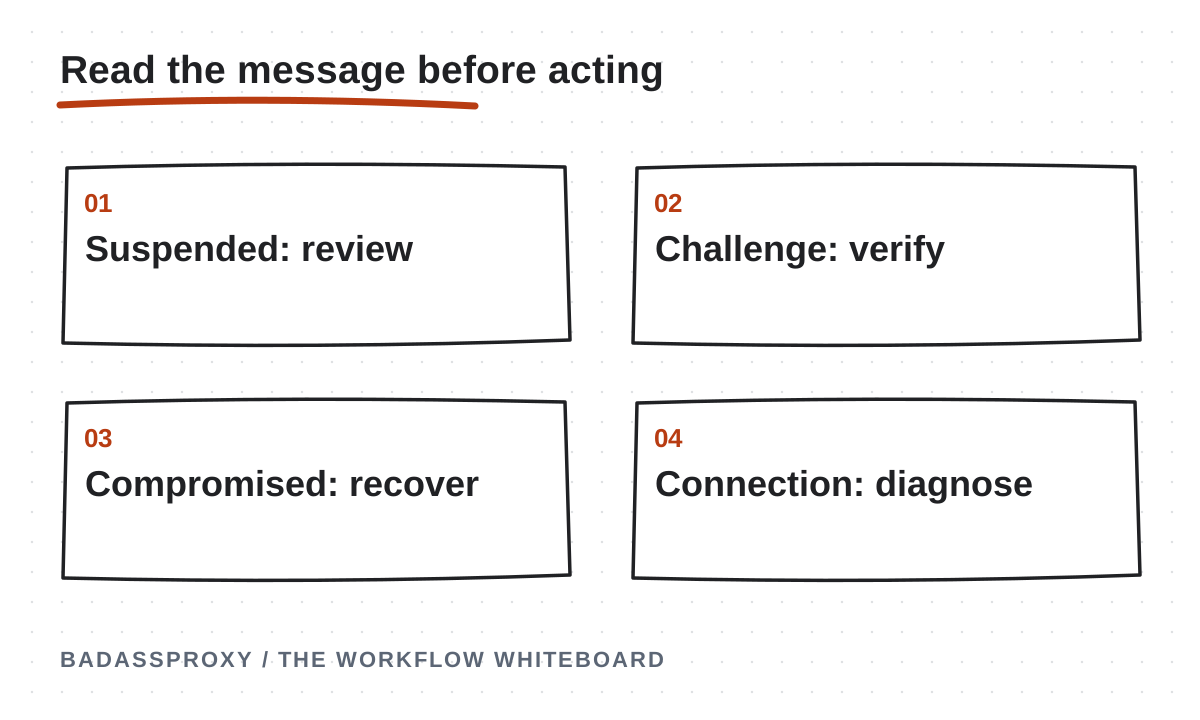
Separate four kinds of interruption
An enforcement message concerns the account or its activity under platform rules. A security checkpoint asks you to establish authorized access. A suspected compromise involves activity or changes you did not make. A technical failure involves the app, browser, connection, or service availability.
These categories can overlap. For example, an attacker might change recovery details and then publish prohibited material. Even then, you need the official recovery process and an accurate record of events. Changing the IP address does not resolve either the stolen access or the resulting enforcement notice.
Before taking action, write one sentence describing the category and your evidence. If you cannot identify it yet, keep collecting facts. The discipline prevents a common mistake: treating every problem as a network issue because a proxy seller offers an immediate purchase button.
Why relocation complicates diagnosis
A move introduces several independent changes. Your device may now use Vietnamese mobile data, hotel Wi-Fi, a different time zone, and a new recovery number. A VPN can add another apparent location. You might also install a new app version or replace a damaged phone.
Those changes are normal travel events, not proof of abusive behavior. Meta does not publish a country-specific formula establishing why a particular legitimate traveler receives a challenge. The useful inference is narrower: more simultaneous changes make it harder to isolate which part of your access stopped working.
Our Vietnam account-stability overview explains how browser continuity and connection consistency fit together. It does not claim that Vietnam causes suspensions. Treat the relocation as context for your investigation, not a diagnosis that excuses ignoring the actual message.
If the notice describes suspension or disabling
Use the review or appeal route offered by the official application. Read the requested information carefully, provide accurate details, and retain confirmation of submission. If there is a deadline, prioritize it instead of spending days experimenting with network products.
Do not invent a new location, submit someone else's identity, or create replacement accounts to get around enforcement. An appeal needs truthful information about the account and the decision. No proxy provider can guarantee the outcome or supply a legitimate shortcut to Meta's review process.
Check whether the notice concerns the whole account or a specific feature. A restriction on advertising, messaging, or a piece of content is not necessarily the same as a disabled personal profile. Record the affected asset and action so you use the matching support channel.
If recovery details changed unexpectedly
Unexpected password resets, unfamiliar posts, changed contact details, or unknown sessions deserve immediate attention. Go directly to Instagram's hacked-account recovery. Also secure the email account that controls recovery, because regaining Instagram access will not help if someone still controls your inbox.
Use a device you trust. If you suspect malware or a stolen browser session, preserving that session is less important than removing unauthorized access. Update and inspect the device, change compromised credentials, and revoke sessions through the platform's available controls.
Tell authorized teammates what happened through a trusted channel. Ask them to pause sensitive changes and preserve relevant evidence. Keep communication factual: identify the account, suspicious event, time, and actions already taken. Never distribute recovery codes as part of an incident report.
If a code or identity check is requested
A verification prompt can be a normal ownership check. Confirm that you initiated the login and that the request is inside the genuine app or website. If the destination number or email is yours, use the method offered and keep the code private.
When the old SIM no longer works abroad, check whether another previously configured method is available. Backup codes or an authenticator may help if you set them up beforehand. Do not repeatedly request codes to a number you cannot receive; investigate the recovery options instead.
If the platform requests identity verification, follow its current official instructions. There is no universal proxy setting that removes the requirement. Record progress and wait according to the instructions rather than starting multiple conflicting recovery attempts from different devices and countries.
If the problem appears technical
Start with the least disruptive checks. Confirm that other websites work, finish the venue's legitimate captive portal, check the device clock, and install available security updates. A failed connection or expired session may look alarming without indicating any account enforcement.
If the account still works on one trusted device, avoid signing out of that device merely to reproduce the failure. It may provide a useful recovery channel. Compare the failing environment carefully: browser version, proxy status, network, and the exact point where the error appears.
Change one relevant variable at a time and write down the result. For example, test the network before rebuilding a browser profile. Avoid rapidly cycling through VPN countries. That adds uncertainty and cannot tell you whether the original problem was a password, session, or network failure.
Understand unfamiliar location alerts
An alert's city is not a precise physical locator. Carrier routing and geolocation estimates can make your own login appear elsewhere. That possibility is useful context, but it is never enough to dismiss a session whose device, timing, and activity you cannot explain.
Compare the alert with your own actions and any authorized teammate's activity. Check whether a VPN or proxy was active at that time. Our travel login-location guide explains why internet exit location and your actual position can differ.
If you remain uncertain, treat the session cautiously and use the platform's security controls. A static address can make future records easier to interpret, but sharing an address does not prove that a login belongs to you. Identity and network location are separate pieces of evidence.
Rebuild a calmer working routine
Once access is restored, keep recovery methods current and enable two-factor authentication. Choose a familiar device and persistent browser environment for important work. Schedule necessary account changes so you can verify their effects and recover if something fails.
If you need a managed browser workflow, AdsPower can organize a persistent profile and its proxy configuration. A static IP for Instagram can hold the configured network exit steady. Both are operational tools; neither replaces account ownership or compliant behavior.
For teams, give each person appropriate native business permissions and document handovers. Do not turn a recovered account into a shared login circulating through chat. The incident is an opportunity to clarify responsibility, not simply to buy a different connection and resume the same access confusion.
When contacting support, include the account identifier, the exact notice, the time it began, and whether you still control the recovery channels. Explain completed steps once. Clear evidence helps distinguish a request for review from a request to fix connectivity, while repeated vague reports can obscure the chronology.
Keep a useful incident record
Record the first error, affected account, device, approximate time, recent changes, and official support case details. Add the actions that worked and the ones that did not. Keep secrets and identity documents outside general team notes, using an appropriately protected storage location when required.
Before your next move, work through the pre-travel account checklist. Test recovery while you still have your usual phone number and devices. Preparation cannot eliminate every verification request, but it can stop an ordinary challenge from becoming a business emergency.
Vietnam itself is not the answer to why access failed. The answer begins with evidence: enforcement, verification, compromise, or a technical problem. Choose the official response that matches, then simplify the environment you control.