

Hotel and coffee-shop Wi-Fi can cause frustrating login problems, but the explanation is often more ordinary than an account ban. A captive portal may be unfinished, the connection may drop, or the venue may block a protocol your browser setup needs. Those are connectivity problems before they are security diagnoses.
Public Wi-Fi also deserves careful security habits, without outdated claims that everyone nearby can automatically read modern encrypted passwords. HTTPS has changed the practical risk. The real task is to separate reliability, routing, and account security so you respond to the problem you actually have.
For an important social account, a predictable workflow helps. That can include a trusted hotspot, suitable device protection, and a persistent browser route when required. No single tool makes an unfamiliar network or website trustworthy.
Modern HTTPS changes the picture
The FTC explains that public Wi-Fi is usually safe when connections are encrypted. Modern websites commonly use HTTPS, which protects traffic between your browser and the website when certificate validation succeeds. Public access does not automatically expose everything typed into a legitimate encrypted page.
However, encryption does not tell you that a website's operator is honest. A fake login page can also use HTTPS. Check the actual domain and open social platforms through a trusted bookmark or official app instead of following an unexpected portal link.
Never bypass certificate warnings merely to get online. A venue's network problem is not a good reason to weaken browser verification. If you cannot reach the genuine site securely, stop and use another connection while you investigate the cause.
Captive portals can interrupt the route
Many hotels require accepting terms or entering a room-related access code before general internet connectivity works. Until that step is complete, websites and proxy clients may time out or display confusing connection errors. The browser is not necessarily failing to authenticate your social account.
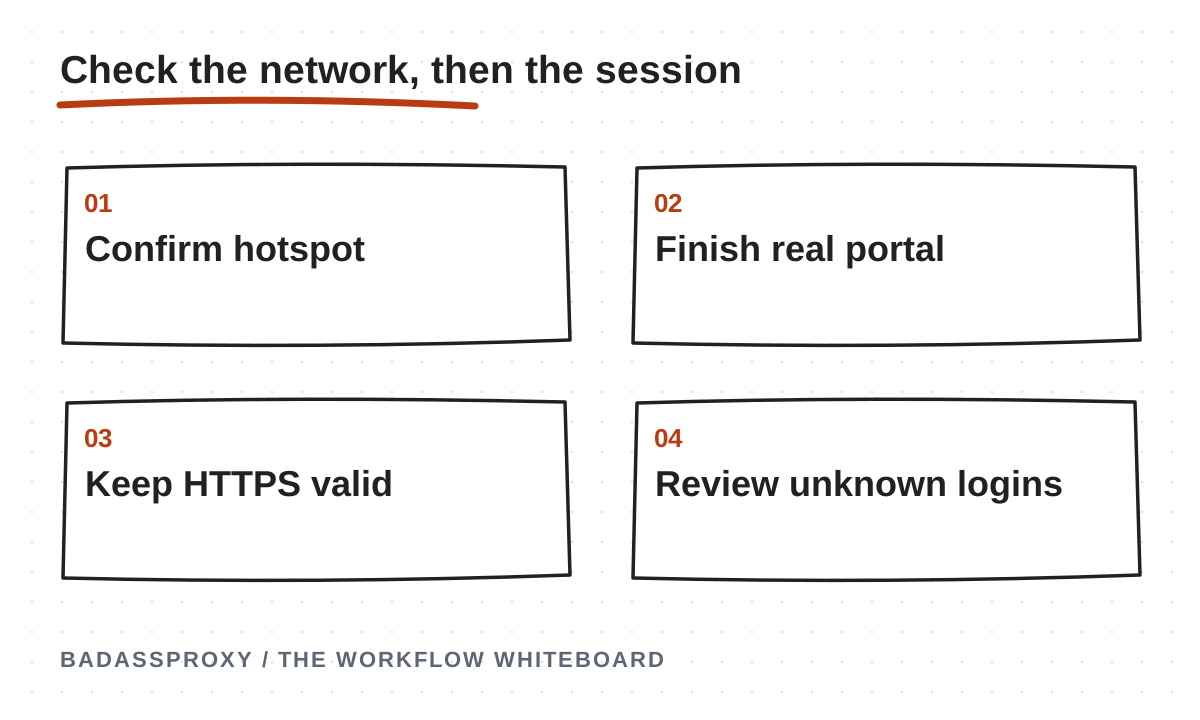
Confirm the venue's official network name and portal instructions with staff. Complete the network's legitimate access process, then reopen your intended workflow. Avoid entering a social password or two-factor code into a portal just because it claims those details are needed to unlock Wi-Fi.
If a managed browser route prevents the portal from appearing, consult the venue and your connection tool's instructions. Finish the network access step separately before working on important accounts. Do not make random security-setting changes until something loads.
Shared addresses affect interpretation
A cafe can route many customers through one public address. Hotels may also share gateways or use centralized infrastructure. That means the address seen by an internet service is not a unique identifier for your laptop or proof of your individual activity.
Other users may generate traffic that affects how particular services treat the shared address, but you cannot diagnose Instagram enforcement from that possibility alone. A challenge could concern the session, credentials, account activity, or other factors the platform does not publicly disclose.
Keep the claim narrow: shared networks introduce variables you do not control. Our Vietnam account-stability overview explains why reducing avoidable changes can simplify operations without proving that a specific gateway caused a particular restriction.
Reliability problems can resemble account problems
A weak signal can interrupt an upload or leave a page partially loaded. A venue may disconnect idle devices, change gateways, or require the portal again after a period of time. A busy network may simply struggle with large media files.
Check whether unrelated websites work and whether the device reports internet access. Compare a small page load with a large upload. If the problem affects everything, investigate the network before resetting the social account or clearing all browser data.
Record the exact error and when it appears. “The proxy connection times out before any website opens” suggests a different layer from “Instagram displays an account suspension message.” Clear wording helps the provider or venue respond without guessing at an unrelated account issue.
Fake hotspots and phishing remain concerns
A malicious hotspot can imitate a venue's name, and a deceptive portal can direct visitors to a false login page. Confirming the network name reduces confusion, but it is not a guarantee against every threat. Continue checking destinations and keeping software current.
Be skeptical of urgent messages claiming that your account will close unless you submit a password, authentication code, or payment. Open the genuine app independently and review available account notifications. Do not use a link merely because it appears alongside a familiar logo.
The physical setting matters too. Keep your screen and devices under control, avoid leaving an authenticated laptop unattended, and do not discuss recovery codes where others can hear. A sophisticated network setup does not compensate for handing someone an unlocked session.
Know what a VPN adds
A reputable, correctly configured VPN can encrypt traffic between your device and its endpoint and cover multiple applications. That can be useful when your requirement is broader device traffic protection on an unfamiliar network. Verify its actual scope and any split-tunneling exclusions.
It does not make a phishing site legitimate or prevent every malicious download. The provider also becomes part of your trust arrangement. Evaluate maintenance, support, connection behavior, and the service's privacy information rather than choosing solely because the application displays a shield.
If a steady address matters, check the plan. Many consumer services use shared exits that can change, while some offer dedicated addresses. Our VPN versus static proxy comparison separates encryption coverage from IP assignment so you can choose deliberately.
Know what a browser proxy adds
A static proxy can give one configured browser workflow a consistent exit even as you change underlying networks. That can simplify troubleshooting and make a managed profile's route repeatable. It cannot repair a broken hotel connection or supply encryption that the chosen protocol lacks.
An AdsPower profile may use a proxy while another browser or native app connects directly. Document that boundary. Do not tell a teammate that “the laptop is protected by the proxy” when only one application is configured to use it.
Test the assigned exit before important work and after a network change when needed. Keep proxy credentials private and monitor renewal. If the route fails, diagnose the connection before switching to multiple new endpoints that make the original problem harder to reproduce.
Use a practical arrival routine
When you begin work at a new venue, confirm the network, complete the legitimate portal, and check ordinary browsing. Open your usual authorized workspace and verify that any required connection tool is working. This takes less effort than recovering from improvised settings later.
For sensitive administration, use a connection you understand and can keep stable long enough to finish. A personal hotspot may be more predictable than a congested venue network, although it still requires a secured device and legitimate websites. Convenience and security are separate judgments.
Keep normal publishing work distinct from major account changes. Unless an incident requires immediate action, avoid replacing recovery methods while simultaneously diagnosing a new laptop, a new network, and a proxy failure. Change sequencing makes the outcome easier to verify.
Respond correctly when something looks wrong
If you see a certificate warning or suspicious portal, disconnect and move to a trusted route. If account activity is unfamiliar, review sessions and use official security controls. Secure the connected email account as well when compromise is possible.
An unexpected city label needs more context. Compare the device, time, and activity before deciding what happened. The travel login-location guide explains why carrier routing, shared gateways, and geolocation estimates can produce a surprising location without proving intrusion.
If an actual suspension notice appears, follow the platform's review instructions. Changing Wi-Fi or buying another proxy will not reverse enforcement. Keep evidence and use the right support channel rather than assuming that the venue must be responsible because you noticed the issue there.
Consider an example: the browser worked yesterday, but every page times out after breakfast at a new hotel. Check the venue portal and basic connectivity before changing the account password. If completing the legitimate portal restores neutral websites and the configured proxy, the evidence points toward network access rather than account enforcement. Record the result and continue cautiously. If only the social account still fails, read its message separately instead of treating the resolved Wi-Fi problem as the explanation for every remaining symptom.
Build habits that travel well
Enable two-factor authentication, maintain recovery access, and update your devices before the trip. Follow the digital nomad security routine and save the pre-travel checklist while your usual recovery channels still work.
Public Wi-Fi is neither an automatic account-ban trigger nor a reason to abandon basic caution. It is a network you understand less well than your own. Treat reliability, encryption, website authenticity, and account ownership as separate questions and choose tools that answer each one honestly.
When a browser workspace needs a persistent exit, a static proxy can provide that specific component. Keep its role explicit, preserve the wider security routine, and measure success by dependable authorized access rather than a promise that every hotel network becomes risk-free.