

Digital nomads have a particular account-security problem: the environment changes while the business still needs to run. A creator may cross a border, replace a SIM, move into a new apartment, and publish a campaign in the same week. Preparation matters more than improvising after a login fails.
Protecting Instagram and Facebook starts with ownership and recovery. A proxy can provide a useful network route, but it cannot recover an inaccessible inbox or replace a phone that holds your only authentication method. Build the recovery plan before choosing connection tools.
The goal is a routine you can follow when tired, offline, or working from somewhere unfamiliar. Keep it small enough to use and clear enough that an authorized teammate can help without receiving every secret you own.
Map the accounts your work depends on
List the social profiles, business assets, connected email accounts, and publishing tools that matter to your income. Record the owner and responsible operator for each. An account that appears unimportant may still control recovery or access to a business page.
Identify the connections between them. If one email inbox recovers your social accounts and password manager, losing it has wider consequences than missing a few messages. If one contractor is the only business administrator, their departure can interrupt work even when every password is correct.
Use a protected inventory without embedding passwords. Link to entries in your password manager and document the recovery owner. Review the map whenever you add a client, delegate a role, or change the device you rely on during travel.
Make recovery survive a SIM change
Check whether the number attached to each account will remain active abroad. A local data SIM does not automatically preserve access to messages sent to your home number. Confirm carrier arrangements before departure instead of discovering the limitation during a challenge.
Choose an available two-factor method you can retain while traveling, and save backup codes securely. Consider what happens if the phone holding your authenticator is lost. A backup is useful only if you can retrieve it without first signing into the account it is meant to recover.
The Meta security resource provides official starting points. Use current account settings to verify the methods actually available to you. Do not assume that a method enabled on one Meta account automatically protects every other account you manage.
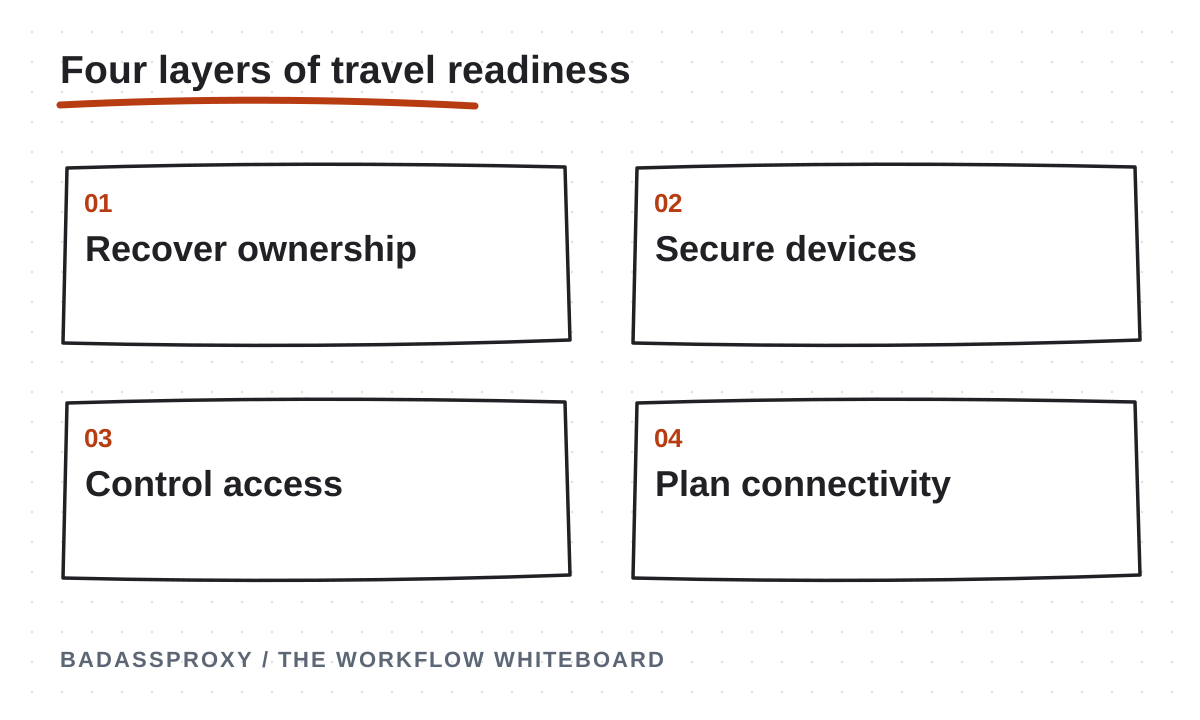
Protect the devices carrying your sessions
Use a strong device unlock method, current software, and disk encryption where supported. Keep your laptop physically controlled in public spaces. A browser left open on an unattended computer can be a more immediate problem than an imperfect IP location label.
Review installed extensions and remove unnecessary ones. Browser extensions can have broad permissions, so do not install a tool simply because a stranger says it will fix a challenge. Obtain software through its official distribution channel and keep updates enabled.
Prepare for device loss. Know how to locate, lock, or revoke access from your devices using the services you already use. Test that you can reach those controls from another trusted device without relying exclusively on the missing phone's authentication prompt.
Establish a normal browser workspace
Choose the environment you will use for important browser work and keep it organized. A persistent profile preserves session data and helps separate client tasks. That can reduce accidental publishing from the wrong account and make handovers easier to explain.
AdsPower is one option when you need managed profiles and individual proxy settings. A conventional dedicated browser profile may be enough for simpler personal work. Choose based on the actual organizational requirement, not a claim that specialized software makes account access invisible.
Avoid clearing cookies or rebuilding profiles as a daily habit. At the same time, continue security updates and remove compromised sessions when needed. Our profile and static proxy setup guide explains how continuity and security fit together without treating persistence as an absolute rule.
Decide how the connection should behave
Your everyday route might be apartment Wi-Fi, a trusted hotspot, or an appropriate VPN. A static proxy becomes relevant when a particular browser workflow needs a consistent exit across those changing underlying networks. It is an optional control for a defined purpose.
Write down which applications use the route and which do not. A browser proxy does not automatically cover your phone, another browser, or background uploads. If you need broader device coverage, evaluate that requirement separately instead of assuming one profile setting changes everything.
Test the chosen setup before departure and record renewal responsibility. The Vietnam relocation guide provides an example of managing international change. The country is context; a repeatable routine is what makes the setup easier to support wherever you travel.
Use public networks thoughtfully
Confirm the hotspot name with the venue and avoid bypassing browser certificate warnings. Complete legitimate captive portals before starting sensitive work. A portal asking for your social password or authentication code deserves suspicion; internet access should not require handing over control of your account.
Modern HTTPS provides meaningful protection even on public networks. Public Wi-Fi should not automatically be described as exposing every password. However, unreliable connections, fake websites, malicious downloads, and unattended devices still create practical risks that a padlock cannot solve.
Read the hotel and cafe Wi-Fi guide for a careful explanation. Use a trusted hotspot when it gives you a more predictable connection for account administration. The purpose is to reduce uncertainty, not to suggest every coffee shop network causes account enforcement.
Give teammates the right access
Use the platform's available business roles and least necessary permissions. Publishing, advertising, billing, and recovery do not always require the same level of access. A contractor creating content should not automatically become the only person capable of administering the entire business.
Record when access begins, which assets it covers, and how it ends. Review native platform roles as well as browser workspace access when someone leaves. Removing a profile permission does not necessarily remove an independent role the person holds inside the platform.
Avoid sending shared passwords and codes through casual chat. Use a controlled access process and a trusted channel for urgent coordination. A static IP can organize a network route, but it does not establish which teammate is allowed to make an account change.
Plan for the day something fails
Choose an incident lead and an alternate. Write a short response plan: record the exact notice, identify the affected account, check for unauthorized activity, and use the matching official recovery route. Keep that plan available outside the account most likely to be inaccessible.
If compromise is suspected, prioritize security over continuity. Revoke unfamiliar sessions, secure connected email, and change compromised credentials through official controls. If the issue is a suspension, use the review process. If it is a network outage, investigate connectivity without repeatedly resetting the account.
Tell clients what is actually affected and when you will next update them. Avoid promising recovery within an invented deadline. A factual operational update is more useful than confident guesses about whether a new proxy will restore access.
Keep the business running during recovery
Maintain copies of content assets and schedules in an authorized workspace separate from a single social login. Know how to reach customers through another established channel if publishing pauses. Business continuity should not depend entirely on one account remaining available every minute.
For teams, ensure another authorized administrator can perform appropriate tasks without using a lost device's session. Test permissions before an emergency. Do not create replacement identities to evade a restriction; continuity planning means preserving legitimate operations within the platform's rules.
Keep your recovery evidence organized. A timeline of messages, case references, device changes, and official instructions can help the owner avoid duplicate attempts. Protect identity documents and private customer information rather than including them in broad team status updates.
For a practical travel rehearsal, imagine your phone is unavailable for a full day. Identify how you would unlock the password manager, reach the recovery inbox, contact the account owner, and continue essential publishing through an authorized colleague. If any answer depends entirely on that phone, fix the dependency before departure. The exercise should reveal operational gaps without requiring you to disable working security controls or share secrets with anyone who lacks permission.
Review the routine between trips
After each move, review what changed and what caused friction. Perhaps the carrier did not deliver messages, the proxy renewal reminder reached the wrong person, or the backup administrator lacked a needed permission. Fix the actual weakness while the details are fresh.
Use the moving abroad checklist before the next departure. A brief rehearsal can reveal whether your password manager, recovery email, authentication method, and secondary device work together. Testing the whole recovery path is more valuable than merely confirming that codes exist somewhere.
If a persistent browser route is part of that plan, explore BadAssProxy static options. Keep the purchase tied to a clear requirement and retain the surrounding security routine. Travel will keep changing; account ownership and recovery should remain under your control.