

“Non-detect browser” is a marketing term, not a technical guarantee. It usually describes software that manages separate browser profiles and some of the characteristics those profiles present to websites. The phrase suggests invisibility that no provider can reliably promise.
The useful questions are more concrete. Does the software keep client sessions separate? Can you maintain a named workspace between visits? Can you control access and assign a suitable connection? Those are operational features you can inspect without accepting an exaggerated claim about avoiding detection.
AdsPower is one example of profile-management software. This guide explains how profiles, browser signals, and proxies relate, and where their limits belong in an authorized social-media workflow.
Start with the browser profile
A profile is a container for a particular browser environment. It can keep settings and website data separate from another profile, helping a user organize different tasks. The precise storage and isolation behavior depends on the browser and product configuration.
For a social-media manager, that separation can reduce accidental account mix-ups. The workspace for one client's brand stays distinct from another client's workspace. Clear naming also makes it easier to identify which environment should be opened before publishing or changing settings.
An ordinary browser can offer separate profiles too. Specialized software may add management, proxy configuration, or team controls, but it is not automatically necessary for a single personal account. Begin with the organizational problem and choose only the features that solve it.
Cookies and storage provide session continuity
Websites use browser data for several purposes, including session handling and preferences. Cookies are one mechanism; local storage and other storage systems are different mechanisms. The MDN explanation of cookies provides a technical foundation without implying every website implements sessions identically.
Reopening a persistent profile can preserve relevant data, while creating a new profile or clearing storage can require signing in again. That continuity is convenient on a trusted personal device, but it should not be confused with a permanent right to access the account.
The platform can expire or revoke sessions. Security incidents may require you to remove them deliberately. A profile is therefore a managed working environment, not a backup identity that overrides password changes, ownership checks, or the account owner's decision to revoke access.
A browser fingerprint is a collection of signals
Websites can observe characteristics of the browser environment, such as capabilities, language settings, screen information, and aspects of rendering. “Fingerprint” is a broad term for using combinations of such signals to distinguish or relate visits.
The exact signals used by a particular platform and their importance are not fully public. A product that exposes configuration controls cannot honestly guarantee that every relevant signal is hidden. Websites also have account history, behavior, server-side records, and security events beyond browser settings.
Avoid turning this concept into a checklist for impersonation. The legitimate operational goal is a consistent, supported environment for authorized work. Randomly changing characteristics can make troubleshooting harder and may create contradictory settings without providing a benefit you can measure.
Isolation does not prove identity
Keeping two sessions apart does not establish that either account is genuine or that the operator has permission. A browser can organize access, but authorization still comes from the account owner and the platform's supported access model.
Likewise, separating workspaces does not guarantee that a platform cannot associate activity through other information. Billing relationships, account details, connected business assets, and behavior may exist outside the browser environment. Do not promise clients that profile isolation removes every relationship between their accounts.
Use the software for clarity: named workspaces, reduced accidental cross-posting, and controlled access. Those are defensible benefits. Claims about invisibility, guaranteed account survival, or immunity from enforcement replace a useful tool description with something the seller cannot verify.
The proxy controls a different layer
A proxy routes configured traffic through another server. Its exit address is a network property, whereas the profile organizes browser state and settings. Changing the proxy does not automatically create a fresh account, erase server records, or replace the browser's stored session data.
A static proxy can keep the assigned exit consistent across repeated use. A rotating proxy deliberately changes exits according to its service design. Pairing a persistent profile with unnecessary rotation can work against a requirement for a predictable route.
The static versus rotating guide explains that assignment decision. First establish whether a proxy is needed at all, then select the behavior that matches the task. A profile-management product does not make every proxy type appropriate for every account.
What a useful setup looks like
Imagine an agency managing two authorized client brands. Each client has a documented owner, native business permissions, and a named browser workspace. Operators can identify the correct account before posting, and sensitive recovery information stays with the people responsible for ownership.
If one workspace needs a consistent exit, assign a suitable static service and record its renewal responsibility. Test the route before account access. Keep profile backups protected and document who can open the workspace. Nothing in this example requires inventing identities or disguising unauthorized activity.
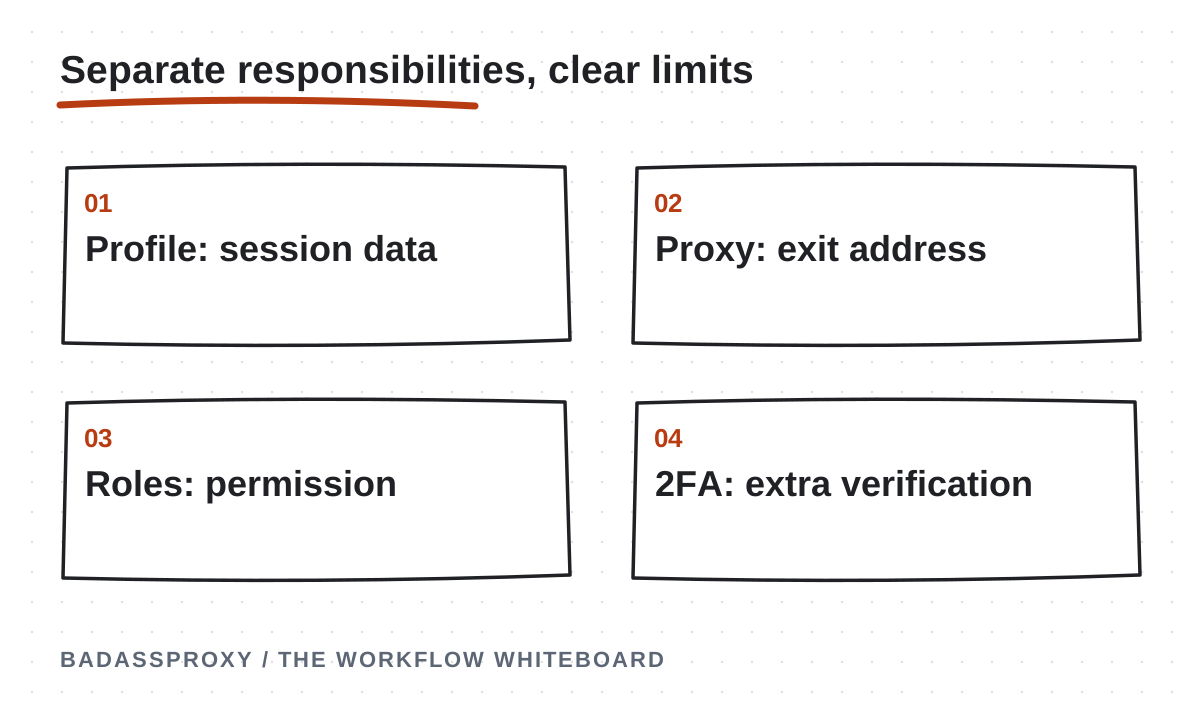
Our Browser and static proxy setup guide turns that model into a practical sequence. The key is separating responsibilities: account permission, browser continuity, connection routing, and recovery each need their own controls.
Treat profile data as sensitive
A profile can contain authenticated sessions and other private browsing information. Sharing an archive may therefore share more access than sending a screenshot. Restrict exports, backups, and cloud storage according to the sensitivity of the accounts inside them.
Review the software provider's security information, access controls, update process, and storage options. Understand whether data is local, synchronized, or transferable and who can retrieve it. Do not assume the word “isolated” means encrypted against every other user of the same computer.
For teams, remove access when work ends and check whether local copies remain. Also review the person's independent platform permissions. A browser workspace and a business role are separate access paths, so revoking only one may leave the other available.
Keep security updates in the routine
Some users mistake continuity for keeping every software version unchanged forever. That creates unnecessary security risk. Use supported versions, install updates, and maintain a record of changes if the workflow is sensitive enough to require troubleshooting evidence.
Extensions deserve similar attention. Add only the tools needed for authorized work, obtain them from trusted sources, and review their permissions. A specialized browser does not neutralize a malicious extension or protect a user who hands over a recovery code.
When compromise is suspected, prioritize account security over preserving a familiar session. Revoke access and rebuild the environment when appropriate. A profile's history is not worth retaining if the device or session is no longer under the owner's control.
Evaluate a product without marketing shortcuts
Ask whether you can name profiles clearly, assign supported proxy settings, test connections, control team access, and recover essential configuration. Check the provider's documentation for your operating system and the features included in the plan you are considering.
Evaluate the effort required to maintain the setup. A solo creator may value simplicity over extensive controls. An agency may need documented handovers and stronger workspace administration. More settings do not automatically produce better security or a more dependable business process.
Use a small authorized trial to inspect practical behavior. Confirm that the correct workspace opens, expected data persists, and operators understand the process. Do not call a trial successful merely because the platform did not issue a challenge during a short observation period.
Consider a mistake that profile organization can prevent. An operator has two client tabs open and uploads a draft to the wrong brand. Separate, clearly named workspaces and an account confirmation step can reduce that confusion without changing any fingerprint setting. The improvement is procedural and visible: the operator can identify the intended client before acting.
Consider a different problem: a former contractor still has a business administrator role. Creating another browser profile does not remove that permission. The owner must review and revoke the platform role through its supported controls. These examples show why a browser should be evaluated by the problem it actually solves. Organization, authorization, and incident response overlap in daily work, but they remain different responsibilities requiring distinct checks and accountable owners.
Keep the limits explicit
Do not use profile isolation to impersonate people, manufacture deceptive engagement, hide unauthorized access, or evade a suspension. Those activities are not made acceptable by changing software or network providers. A platform's rules apply to the activity regardless of the browser used.
If you are relocating, the Vietnam account-stability guide explains the legitimate continuity problem. Prepare recovery channels and familiar access, then introduce tools only when they address a specific operational need.
The honest answer to “What is a non-detect browser?” is profile-management software sold with an overconfident name. Its practical value is organization, separation, and continuity. Pair AdsPower with a BadAssProxy static address when those components fit your authorized workflow, while keeping identity, security, and permissions firmly under the owner's control.